

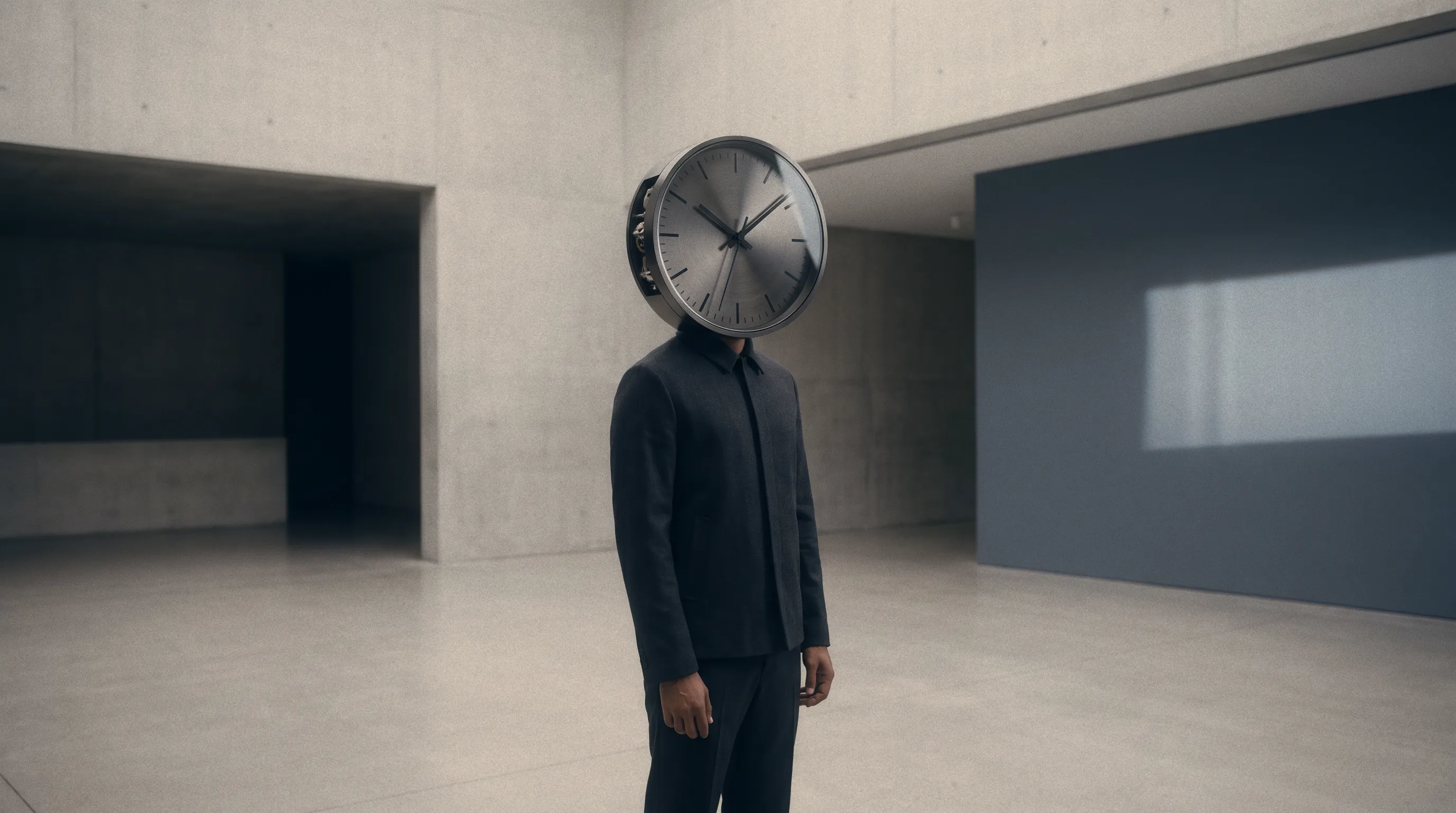
Kalpnk AI Studio (pronounced kalpanik) made its film about a city that waits for nobody under MIFF’s 48-hour hackathon clock. Titled ‘Mumbai Standard Time’, it topped MIFF 2026’s first-ever AI filmmaking hackathon, taking home a 1.5 lakh cash prize and a place in cinema history.
A City That Never Slows Down, A Film That Asked ‘Why’
When Manav Soni, Aayush Raj and Sameer Talawdekar sat down to make a film in 48 hours, they did not reach for a Mumbai of traffic or chaos, the first visual any outsider might conjure. They reached for something quieter and more unsettling; a Mumbai where every person wears a clock in place of a face.
That image became ‘Mumbai Standard Time’. The film won first prize at MIFF 2026’s inaugural AI Cinema Hackathon, making Kalpnk AI Studio the first team ever to win the competition at South Asia’s oldest and most prestigious non-feature film festival, and it was completed end-to-end within the hackathon’s 48-hour window.
The Hackathon titled ‘Mumbai Through a Thousand Eyes’ attracted over 180 registrations from filmmakers, storytellers, technologists and content creators across India. Organised by the National Film Development Corporation (NFDC) under the Ministry of Information and Broadcasting, it challenged participants to reimagine Mumbai through AI tools in a 48-hour sprint. The top 10 films were shortlisted by a jury and screened publicly at MIFF on June 20, and the winner was announced at the festival’s close on June 21.
What ‘Mumbai Standard Time’ Speaks About
The meaning behind the film is simple. In this version of Mumbai, time is what defines a person, not the name, face or identity. Every person has a clock where their face should be.
Three lives carry three different clocks. A gold clock, precious and well-kept, that holds everything of value except the one thing it was made to measure. A jugaad clock held together with tape, improvisation, and a very stubborn kind of hope. And a broken clock that wore itself down entirely, spending its every tick making time for everyone else until there was none left for itself.
The film builds to a single image: every clock-faced Mumbaikar gathered on the steps of the Asiatic Library, the city’s oldest keeper of memory, beneath a question that hangs unanswered: In a city of clocks, who is the time really for?
At its heart, a portrait of a city that is forever short of time and blind to how fast its own is slipping away.
AI As a Creative Collaborator, Not a Shortcut
What the film's observers noted as distinguished was not the technology itself, but what the team did with it. Generative tools were used with deliberate restraint, guided by the filmmaker’s eye for tone, image and emotion rather than deployed for spectacle.
This approach is inseparable from Kalpanik’s founding philosophy that AI is most powerful in the hands of trained storytellers. The studio’s name says it plainly. Kalpanik, the Hindi word for imaginative, signals where the studio places creativity, in the human filmmaker, not the model.
"The technology was never the point for us. The point was telling a very human story about the city we live in. Mumbai Standard Time asks where all our time goes in a place that never slows down, and AI let us put that feeling on screen. To win the first hackathon MIFF has ever held, in a field this strong, is something the whole team will carry for a long time."
- Manav Soni, Co-Founder, Kalpnk AI Studio
That the film went from concept to completion within a 48-hour window is its own kind of argument for what AI-augmented filmmaking can do when the creative leadership is strong.
The Stage: MIFF 2026
The 19th Mumbai International Film Festival (MIFF) ran from June 15 to 21, 2026, at the NFDC Films Division Complex in Mumbai. South Asia’s oldest and largest festival for documentary, short fiction and animation, this edition received 1,459 film entries from across the world and screened films from 46 countries over 83 hours of programming across 24 curated segments.
This year’s edition also featured:
- 10 masterclasses
- Five IDPA open forum discussions
- A second edition of the WAVES Doc Bazar
The introduction of the AI Cinema Hackathon marked the festival’s clearest signal yet that artificial intelligence is now a serious, legitimate instrument of cinematic storytelling, not a novelty but a craft.
Watch ‘Mumbai Standard Time’ on YouTube
Link to film: https://youtu.be/r2PI_MxYdw8
How Kalpnk AI Studio is Changing Indian Filmmaking
The MIFF 2026 win comes on the heels of another national recognition. Kalpanik was previously honoured with the Best AI Film award at the 56th International Film Festival of India (IFFI), held in Goa. Together, the two awards mark Kalpanik as one of the early Indian studios proving that AI and filmmaking craft can advance together.
The same instincts drive the studio’s commercial work. Its ‘Dildaari Battles’ campaign for Dinshaw’s, the 94-year-old dairy brand, drew more than 67 million views and beat its targets threefold, proof that the craft that wins juries also moves audiences and brands. Built on the belief that AI is most powerful when directed by trained storytellers, Kalpnk brings a filmmaker’s instincts to every frame: tone, pacing and emotion.
See more of our work at kalpnk.ai. Have a story worth telling? Start a project with us.